The collector’s perspective
The Neptune is most persuasive as a deliberate design choice: a rounded, richly articulated bracelet watch with its own character. Its appeal should survive without a story about becoming the next Nautilus.
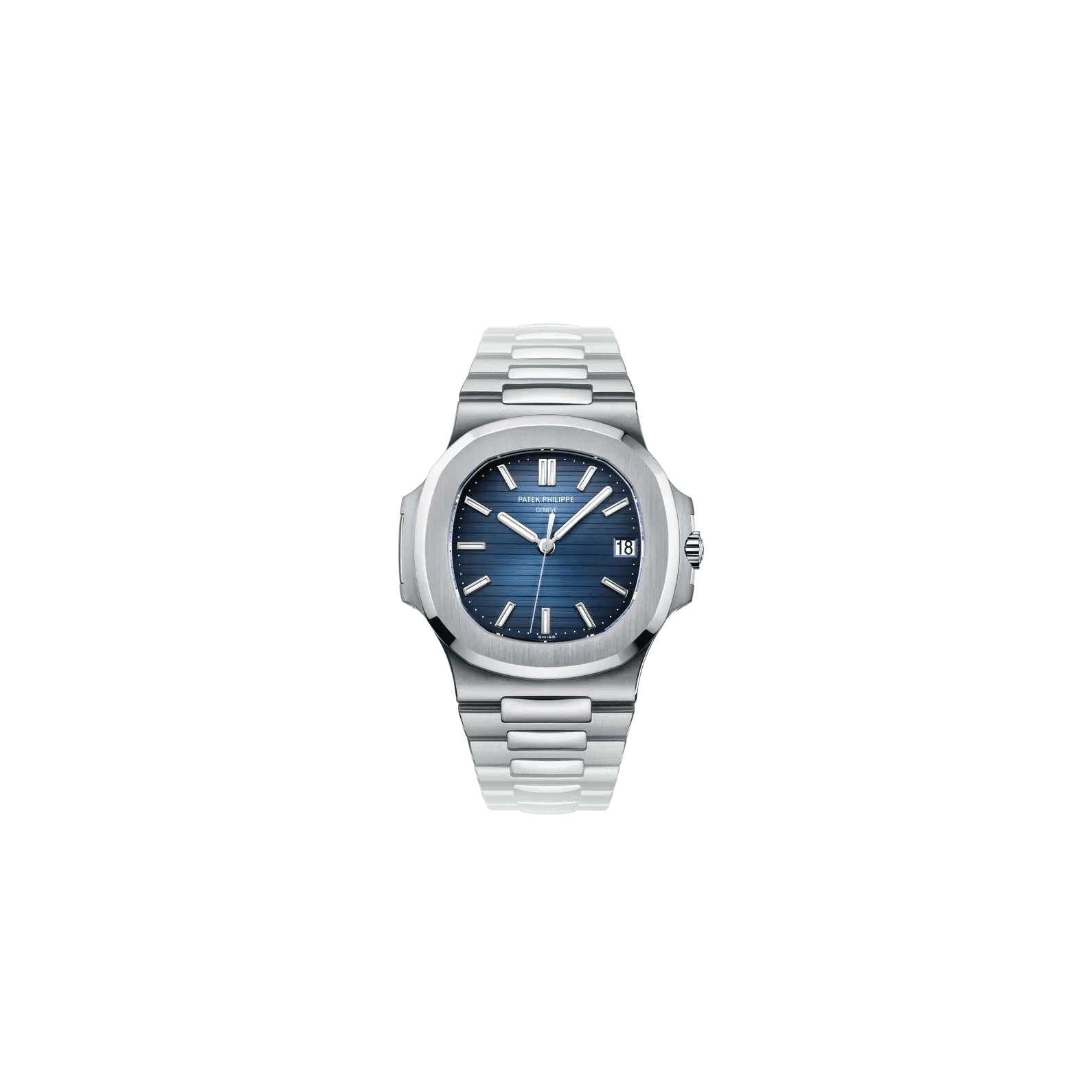
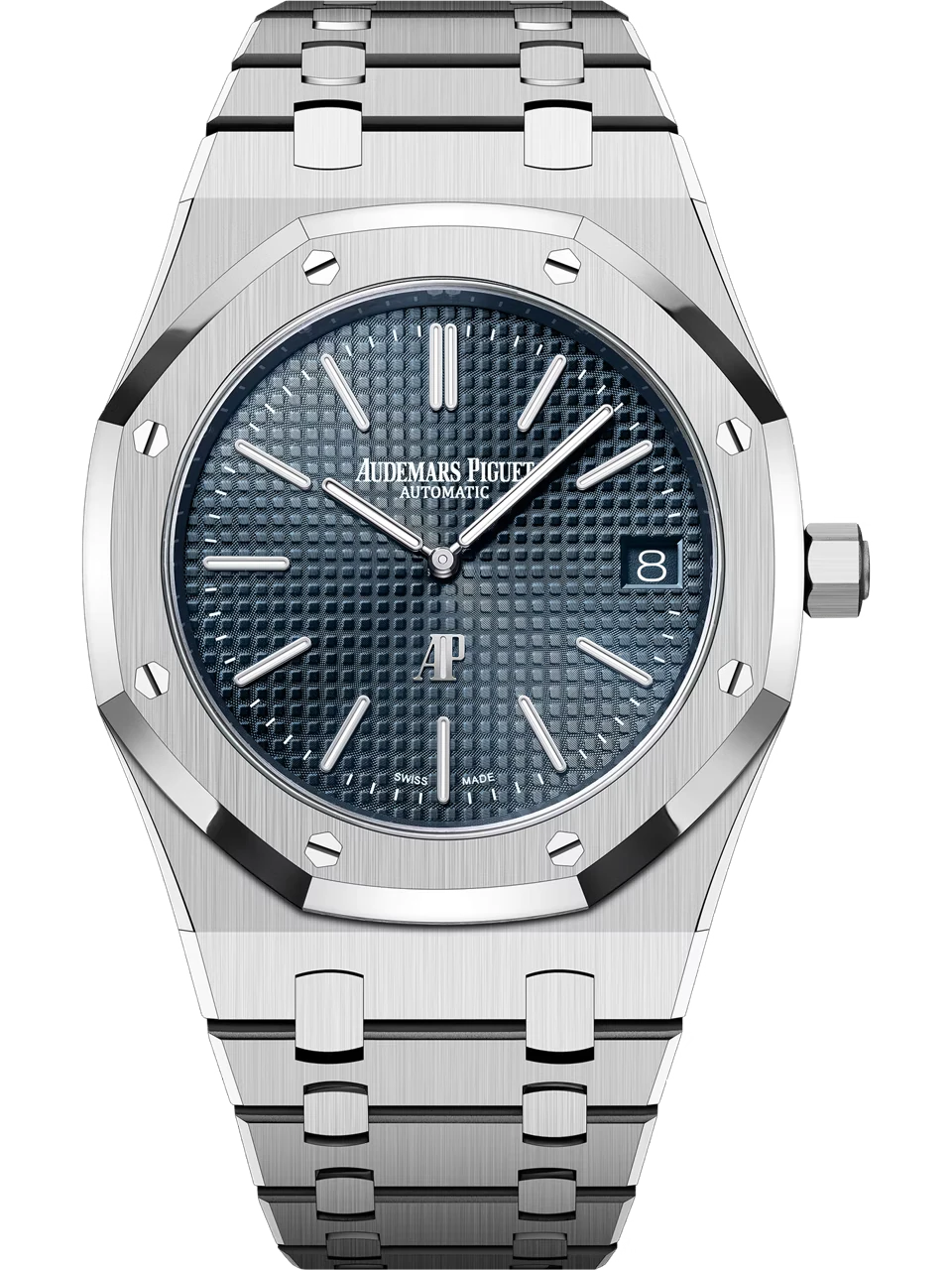
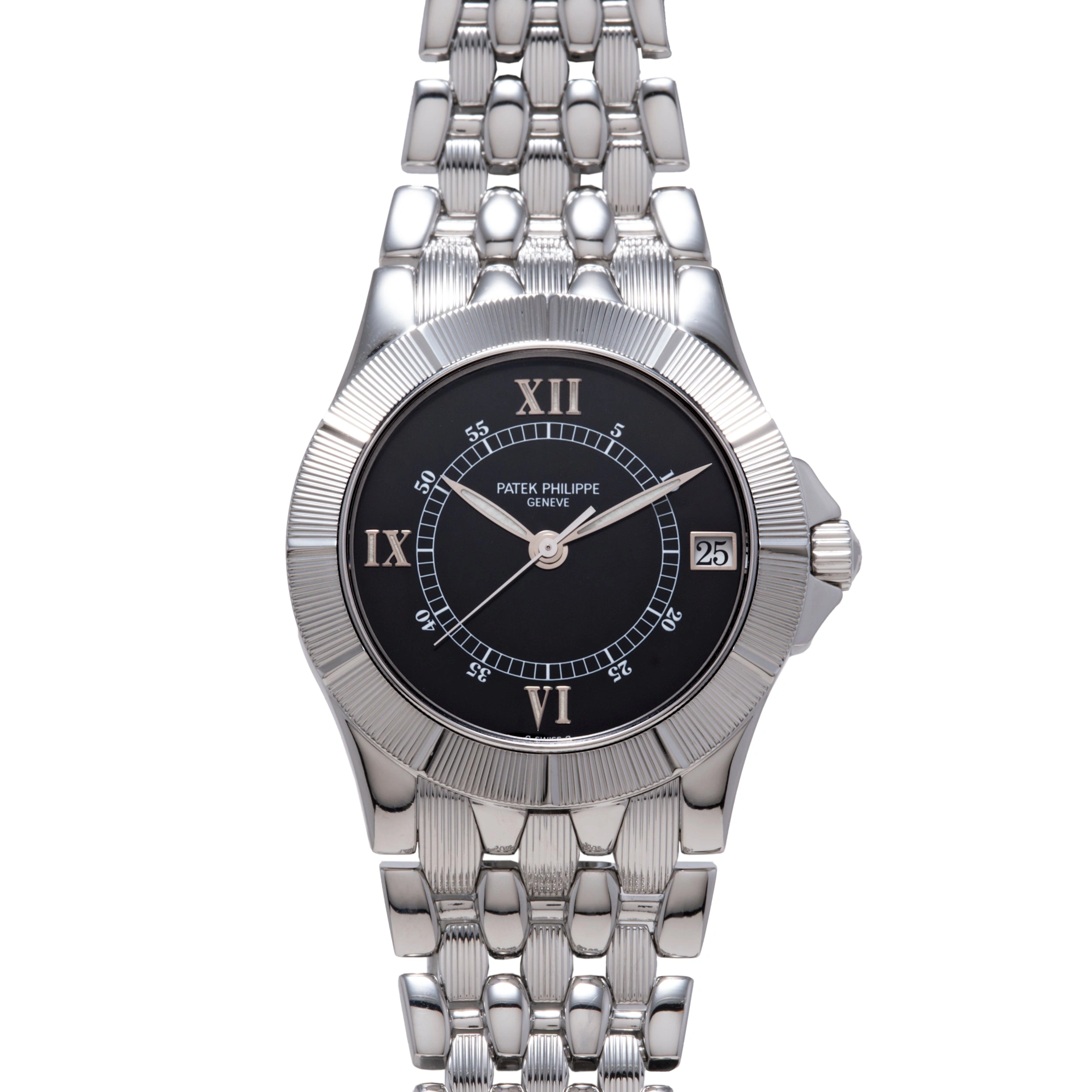
The Neptune asks a useful question of a Patek Philippe collector: do you want the familiar signal of a famous sports watch, or do you want this particular watch? Its round case, conspicuous crown guards and bracelet of closely spaced links create a softer silhouette than the angular bracelet watches with which it is often compared. The attraction is tactile and proportionate. The bracelet deserves as much attention as the dial.
The documented core begins in 1996 with the automatic 5080 and 5081. Smaller quartz watches bearing the Neptune name belong in the same discussion, but not in the same mechanical or pricing category. The 5085 also appears under the Neptune name in auction catalogues; its different movement and additional displays make it a separate buying proposition. A collector guide should preserve those distinctions before discussing rarity or price.
Our editorial preference is to buy the design in the configuration you actually enjoy. A steel Roman-numeral example, a gold watch on leather and a small diamond-set quartz model answer different desires. None needs to be justified as a substitute for a more fashionable reference. That independence is the Neptune’s strongest argument, and the best defence against paying for a speculative rediscovery narrative.
Design & inheritance
A lineage in time
A smaller quartz branch
Phillips catalogued a circa-1998 steel 4880/1A-011 with a 27 mm case and E-19 C quartz movement. It is a distinct small-format Neptune, not an automatic 5080 scaled down without mechanical changes.[8]
The reference library
Know what you are looking at.
A map of the major reference families covered in this study. Grouped numbers are related variants, not a claim that every dial or material shares identical specifications. Check the complete reference and the individual watch.
6 of 6 reference groups
5080 / 5080/1A
1996–2002Steel automatic date watch, generally catalogued around 36–36.5 mm; documented copper, black and light dial examples.
Movement 315 SC family; nomenclature and jewel counts vary across published lot descriptions.
5080/1, steel and gold
Documented 1996 exampleSteel case with gold reeded bezel and a steel-and-gold bracelet; black dial in the cited Christie’s lot.
Movement 315 SC automatic
This is documented two-tone production. A steel example and a two-tone example require separate comparables and a careful bracelet/material description.
[3]5081 / 5081/1
1996–2002Yellow-gold automatic date family, documented on both leather and a gold bracelet; black and silvered dial examples.
Movement 315 SC / 315/190 SC as catalogued
4880/1A-011
Documented circa-1998 example27 mm steel quartz date watch with centre seconds, luminous Roman numerals and steel bracelet.
Movement E-19 C, quartz
A separate small-watch market. Obtain a movement inspection and battery/service record rather than valuing it as a miniature mechanical 5080.
[8]4881/120
Documented discontinued jewellery exampleThe cited Skinner watch is 27 mm white gold, with mother-of-pearl dial and diamond-set dial ring, bezel and lugs.
Movement E19C, quartz
The reference and gem setting need object-level verification. The cited lot establishes one configuration, not an exhaustive 4881 catalogue.
[9]5085/1A — separate complicated branch
Documented circa-2002 exampleSotheby’s uses the Neptune name for a 37 mm steel bracelet watch with date, moon phase and power-reserve display.
Movement 240/164 automatic in the cited lot
Include it when searching auction catalogues, but isolate its specifications and comparables. The auction classification does not make it mechanically interchangeable with a 5080.
[10]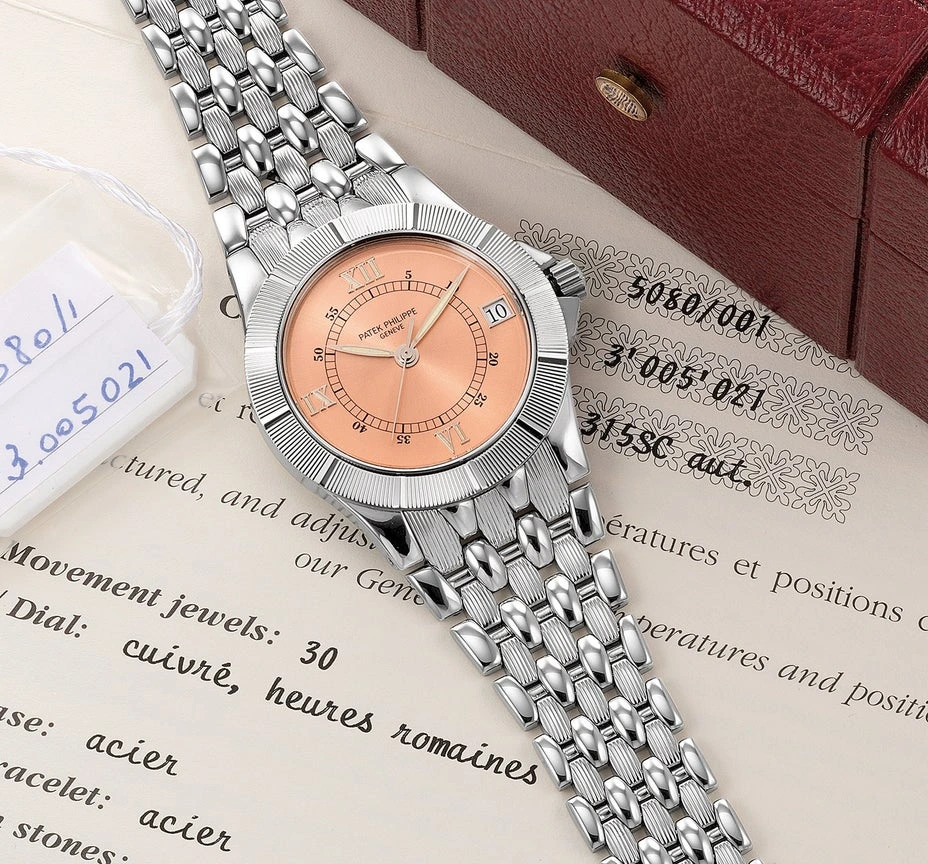
Editorial assessment
Read the Neptune through its bracelet
In the documented 5080, a compact round case sits above a multi-link bracelet developed for the model. Crown guards add visual width without changing the circular dial. A reeded bezel and the repeating bracelet surfaces give the watch more texture than a plain round dress watch. Our reading is that this combination, rather than an imagined contest with the Nautilus, explains its appeal.
Try it with the clasp closed and the bracelet properly sized. A case-only photograph cannot show how the links drape, whether the clasp sits centrally or whether the first links pull the watch away from the wrist. Ask for a photograph from the side and a short video of the bracelet moving. Those requests help distinguish a watch that looks attractive in isolation from one that fits comfortably.
Published dimensions differ: the Phillips steel example is listed at 36.5 mm, while several Christie’s and Sotheby’s entries use 36 mm. That is a reason to request an actual measurement and wrist photograph, not to invent a new size category. Crown guards, camera perspective and the bracelet’s first links all influence the impression of size.
[1][3][4]Steel, two-tone and gold are separate collecting decisions
A copper-toned steel 5080, a black-dial two-tone 5080 and a silver-dial gold 5081 are all documented by the cited auction houses. These are useful anchors because they identify materials, movement and archive information together. A descriptive nickname such as salmon is less precise than the actual dial wording in an extract and the present appearance of the watch.
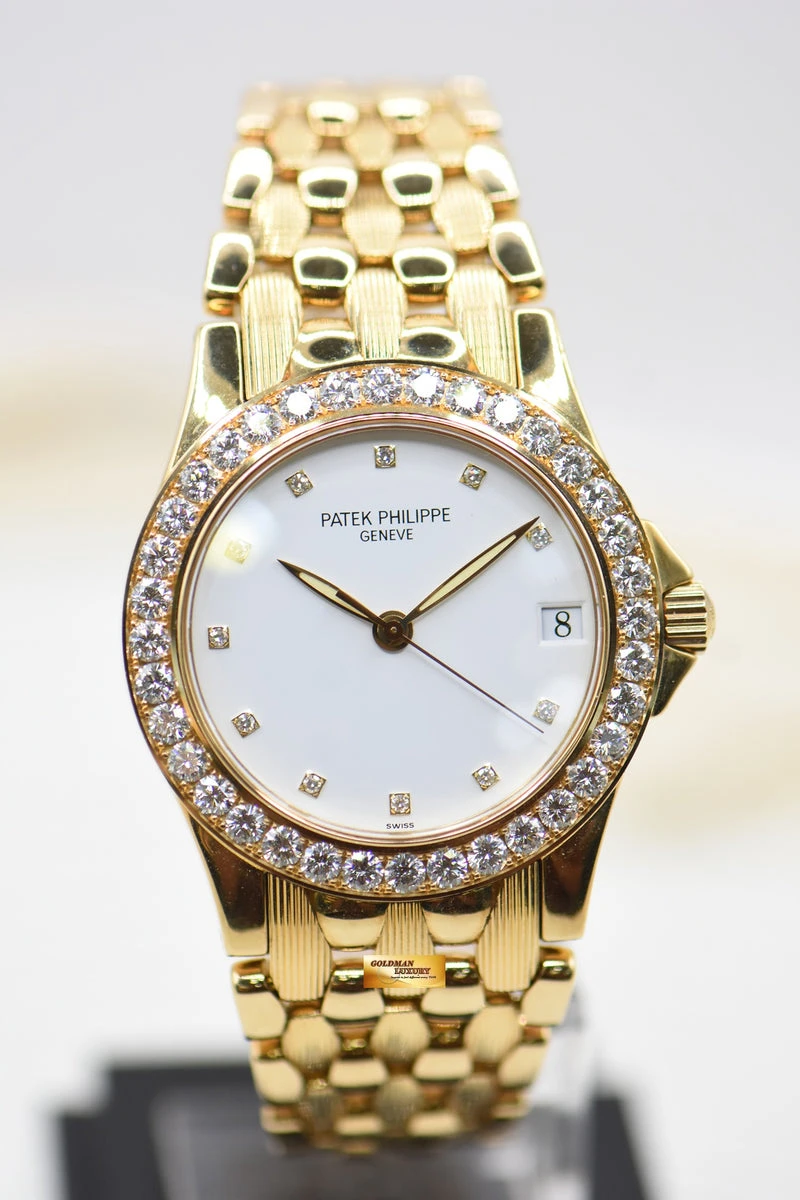
The yellow-gold 5081 on leather is particularly important to classification. Phillips sold an example with an archive-confirmed black Roman-numeral dial; Sotheby’s documented a 5081/1 with a silvered dial and gold bracelet. The reference therefore cannot be reduced to the diamond-set examples found in dealer advertisements. For a gem-set example, request documentary support for the exact setting instead of treating the presence of a Patek signature as sufficient evidence.
Editorial assessment: choose metal and dial before choosing a bargain. If you want the bracelet experience, a missing or unsuitable bracelet changes the proposition fundamentally. If you prefer leather, confirm that the case attachment and clasp belong to the offered configuration. A lower entry price is useful only if it buys the watch you intended to own.
[3][5][6][4]Keep the quartz watches and the 5085 in their own lanes
The 4880/1A-011 is documented with an E-19 C quartz movement; the white-gold 4881/120 jewellery example also uses E19C. Their small proportions are an affirmative design choice. A buyer who likes a 27 mm watch should assess legibility, bracelet fit, battery condition and gem setting rather than assume a mechanical alternative is inherently more appropriate. Historical auction descriptions may call them ladies’ watches; that is a catalogue category, not a rule about who can wear them.
Sotheby’s explicitly calls its 5085/1A a Neptune and records calibre 240/164, moon phases and a power-reserve indication. This guide recognises that documented trade classification while maintaining a clear boundary. A 5085 is not a 5080 with an alternative dial. Its displays, movement and service assessment demand their own comparisons. We do not infer an official collection history beyond what the cited record establishes.
Editorial assessment: the correct question is which experience you want. Quartz prioritises straightforward ownership and small scale; the automatic date watches offer the core rounded bracelet design; the 5085 adds information and mechanical interest. Calling all three simply Neptune can make searches easier, but makes a purchase analysis less accurate.
[8][9][10]Traditional mechanics in an unconventional sports watch
The 5080’s mechanism is part of its identity. Christie’s documents a 2000 example with calibre 315 SC, a Geneva Seal, Gyromax balance and 21-karat gold rotor. Patek’s own technical literature confirms the 315 SC’s central-rotor architecture. By contrast, a documented 5085/1A uses calibre 240/164 with an integrated 22-karat gold minirotor, seen through its transparent back. Its small seconds, pointer date, moon phase and power-reserve display are a different mechanical proposition from the 5080’s central seconds and date window. This is why the two references need separate functional checks and service assessments, even when a seller groups them under Neptune.
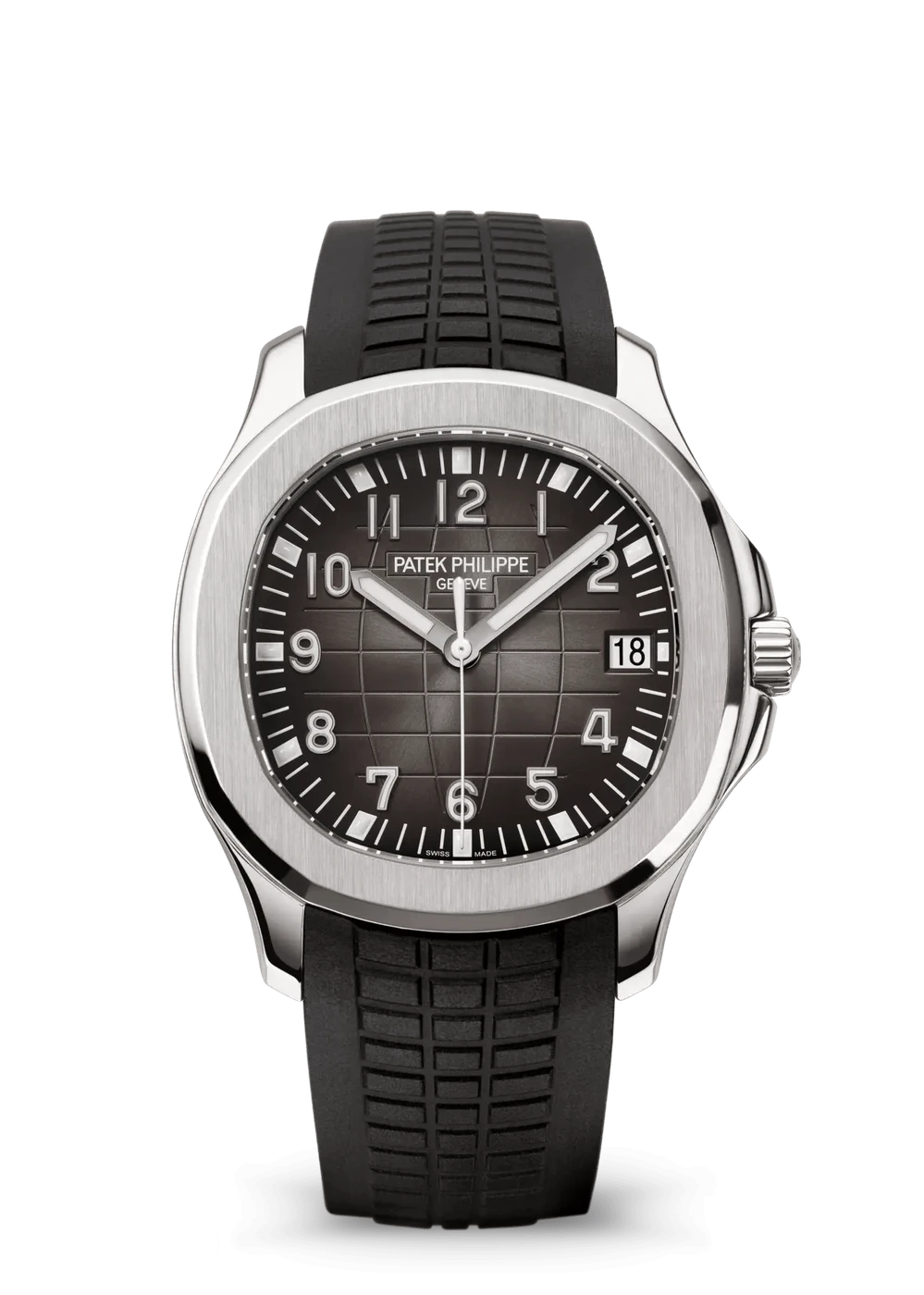
The 1996 launch also places the Neptune immediately before the Aquanaut’s documented 1997 debut. Editorial assessment: its round dial, Roman numerals and reeded bezel carry traditional dress-watch cues into a guarded case and elaborate bracelet. The result occupies a distinctive position beside the Nautilus’s angular outline and the Aquanaut’s patterned dial and strap. That comparison describes the designs; it does not establish that Patek intended the Neptune as an Aquanaut prototype. Nor does the movement relationship justify copying later watches’ power-reserve, sealing or service specifications onto a 1990s Neptune. Verify those matters for the individual watch.
[15][16][17][1][18]Build a paper trail that explains this watch
Patek Philippe distinguishes the original Certificate of Origin from an Extract from the Archives. The latter transcribes historical records; it is not a newly issued original certificate. The manufacture states that a lost Certificate of Origin cannot simply be reissued. For a Neptune, request readable documents showing reference, case and movement numbers, then have the physical watch checked against them.
Separate the date of manufacture, first recorded sale and later guarantee or service dates. A long interval between those events should prompt a question, not an automatic accusation or an invented production year. The value of a document is in the information it connects to the actual watch. A box is pleasant to have, but cannot establish the originality of a dial, the completeness of a bracelet or the condition of a movement.
Patek’s published servicing process begins with archive checks and examination of both internal and external components. Ask for an itemised proposal where work is needed, including any suggested replacement of visible parts. Decide in advance whether preserving an aged dial and case surface matters more to you than cosmetic renewal. Do not approve refinishing through a vague instruction to make the watch look new.
[12][13][14]Editorial assessment
Condition is a series of questions, not one adjective
Ask what the seller means by excellent. Obtain close views of the bezel ribs, crown guards, lug transitions, caseback and clasp. Look for consistency of surface finish and ask specifically about polishing, repairs, replacement hands and dial work. Photographs can identify questions; they cannot certify metal integrity or the origin of every component. A watchmaker’s inspection should answer the mechanical questions before payment.
Bracelet length is especially practical. The cited steel auction examples were offered with different stated lengths, and a bracelet that cannot be sized for you is not a minor inconvenience. Ask how many removable links are fitted, whether loose links accompany the watch, how the clasp closes and whether replacement components can actually be supplied. Obtain a price and availability answer before assuming a short bracelet is cheaply fixable.
The Christie’s 2023 5080 was described as operating while service was recommended. That is a useful distinction: running during cataloguing is not a service history, accuracy test or promise of water resistance. For quartz pieces, request a battery inspection that also addresses leakage or corrosion. For all examples, treat the Neptune name as design language, not permission to swim with an untested older watch.
[2][4][8]Editorial assessment
Build comparables without manufacturing a price trend
Start with the same reference, material, dial type and bracelet configuration. Then annotate completeness, service, case condition and sale date. The observations below deliberately span different branches: they demonstrate why a single Neptune average is not useful. The gold im Kinsky watch was offered without papers; the Christie’s steel watch came with both a certificate and an extract. The differences belong beside the numbers.
The live Watches of Switzerland listing is an asking price observed on the research date. It does not prove a completed transaction at that amount, and its 37 mm description should not overwrite auction measurements of other watches. A dealer’s price also belongs to a different transaction structure from an auction hammer price. Keep the currency and fee basis visible instead of converting everything into a falsely precise local range.
For a Singapore purchase, request a final written SGD quotation that identifies the watch and includes the agreed scope of service, delivery and any applicable charges. For an overseas transaction, price the foreign-exchange conversion, insured shipping and any applicable import/GST obligations using current official guidance. Compare the total acquisition cost with a realistic dealer purchase offer, not with another seller’s advertisement. That spread is a cost of ownership, not an investment forecast.
[7][2][11]Dated evidence, not a live quote
Prices & market context
Each figure belongs to the named reference, source and date. Auction outcomes, retail prices, dealer asks and modelled estimates measure different things. Original currencies are retained; no currency conversion or automatic appreciation is implied.
5081, yellow gold on leather, black Roman dial
Phillips, The Hong Kong Watch Auction: FOUR, lot 932 · Published sold-for result including buyer’s premium; historical evidence for the described 1996 watch, not a current quote or seller’s net proceeds. Certificate and extract accompanied it. Consult the sale’s fee terms for total acquisition costs.
View source [5] ↗5081/001, yellow gold, black dial
im Kinsky, auction 141, lot 1076 · The auction house explicitly includes fees and Austrian VAT; hammer was EUR 15,000. Worn example without papers, reported running without guarantee.
View source [7] ↗5080/1A-010, steel, silvery-grey dial
Christie’s, Watches Online: Top of the Time, lot 105 · Published Price Realised, not hammer. Circa-1999 example with Certificate of Origin and Extract from the Archives; service recommended in the condition report. Shipping and applicable transaction charges require separate checking.
View source [2] ↗4880/1A-011, steel quartz, 27 mm
Phillips, Hong Kong Sessions Spring 2023, lot 8091 · Published sold-for result including buyer’s premium for a circa-1998 quartz example offered without reserve; blank certificate, service invoice and box listed. Not comparable directly with an automatic 5080.
View source [8] ↗5080/1A-001, steel, black dial
Watches of Switzerland US, product AS12450 / 40931065 · Listing observed on this date, not a sale result or listing creation date. Seller describes a pre-owned 2000s example in very good condition. Availability, taxes and delivery must be reconfirmed.
View source [11] ↗Editorial assessment: these observations support reference-by-reference comparison, not a conclusion that all Neptunes rose or fell together. Dates, currencies, mechanics and completeness differ too much for a defensible percentage return.
A thin set of public transactions can make a rare configuration difficult to price as well as interesting to collect. Ask how much confidence the evidence supports, and allow room for service and bracelet work before negotiating.
Treat this as a snapshot of evidence researched on 25 October 2026. A new sale, a revised condition report or a withdrawn listing can change the decision; no figure here guarantees the proceeds of a future resale.
Editorial assessment
Brand position and collecting potential: individuality has a price
Editorial assessment: the Neptune offers a distinctive way into Patek Philippe’s bracelet-watch history. Its rounded shape, Roman numerals and textured links connect traditional dress vocabulary with casual construction. Beside the Nautilus and Aquanaut, its appeal is difference, not an assumption that every discontinued Patek sports watch must eventually command the same attention. The documented 315 SC and quartz branches also let the collector choose mechanical character or smaller proportions without pretending they are interchangeable.
The strongest collecting opportunity is a coherent, wearable example whose original configuration can be explained. A well-documented steel 5080 makes the core design easy to understand; a gold 5081 on leather changes that proposition substantially. Neither is automatically undervalued because another Patek family costs more. Bracelet completeness, believable dial history and service needs can sustain or erode the attraction of the individual watch.
Public comparables for particular executions are thin. Our assessment is that this makes an eventual exit harder to plan confidently, especially for unusual settings or small quartz variants. Buy with room for maintenance and an uncertain selling period. The potential value is ownership of an individual design you understand, not a promised convergence with Nautilus prices.
What sustains the appeal
- A recognisable rounded case and textured bracelet identity
- Distinct mechanical, quartz and precious-metal collecting paths
- Documented auction examples that allow configuration-specific research
What can erode the value
- Sparse comparable sales for particular dial and jewellery variants
- Bracelet condition, missing links and uncertain replacement costs
- Confusion between factory configuration, later changes and auction naming
A practical inspection
Before you buy
Identify the branch
Record the full reference, material, movement and dimensions. Separate 5080/5081 automatic, 4880/4881 quartz and the complicated 5085.
Verify the visible configuration
Compare dial, hands, bezel, setting and bracelet with the documents. Ask explicitly whether any diamonds or replacement components were added later.
Fit the bracelet
Confirm wearable length, loose links, clasp operation and any repair history. Obtain a written quote for missing components before agreeing a price.
Inspect the movement
Request service records and an appropriate inspection. A running watch is not evidence of recent service or tested water resistance.
Reconcile the documents
Distinguish manufacture, first sale and later service dates. Match case and movement numbers through qualified inspection rather than opening the case yourself.
Agree the transaction
Get a final SGD price, exact included accessories, condition disclosures and written return/service terms. Account for cross-border costs where relevant.
Collector questions
When was the Patek Philippe Neptune made?
The cited Christie’s and Phillips histories place the core automatic 5080 and 5081 references in 1996–2002. That is not a blanket date range for every Neptune jewellery variant, nor does it mean every watch was first sold before the production period ended.[2][5]
Is every Neptune automatic?
No. The documented 4880/1A-011 and 4881/120 examples use E19C quartz movements. The 5080 and 5081 examples use the 315 SC family. Identify the reference and movement before comparing prices.[8][9][5]
Does the 5085 belong in a Neptune search?
Yes, because Sotheby’s explicitly catalogues a 5085/1A under that name. Keep it separate in a buying comparison: the cited example uses calibre 240/164 and adds moon phases and power reserve, unlike the core automatic date references.[10]
Does an archive extract replace the original certificate?
No. Patek Philippe describes an extract as a transcript of historical records and the Certificate of Origin as the original document delivered with a new watch. Read the extract alongside the physical watch and service history.[12]
Research notes
Sources & methodology
Researched 25 October 2026. Manufacturer records anchor product history and specifications; auction catalogues describe individual examples. Seller pages and market data retain their stated dates and limitations. Opinions are editorial assessments based on this evidence. Photographs show identified reference examples and do not establish stock availability or our ownership. Singapore Gold Market is independent of Patek Philippe.
Phillips · Accessed 2026-10-25 · Early steel example, dimensions, movement and archive information; auction history dates 5080 introduction to 1996.
Christie’s · Accessed 2026-10-25 · Published HKD 163,800 realised result; condition report and 1996–2002 reference history.
Christie’s · Accessed 2026-10-25
Sotheby’s · Accessed 2026-10-25
Phillips · Accessed 2026-10-25 · 30 May 2017 auction; black-dial leather-strap example and published HKD 93,750 result.
Sotheby’s · Accessed 2026-10-25
im Kinsky · Accessed 2026-10-25 · 7 December 2022; EUR 19,200 includes fees and Austrian VAT, EUR 15,000 hammer.
Phillips · Accessed 2026-10-25 · 28 March 2023 sale; 27 mm E-19 C quartz watch, HKD 44,450 published result.
Bonhams Skinner via Bidsquare · Accessed 2026-10-25 · 9 August 2022; used for configuration only. Ambiguous dual price display excluded from the price table. The original Skinner URL was unavailable; the same lot's auction-house publication on Bidsquare was verified on 2026-10-27.
Sotheby’s · Accessed 2026-10-25 · Explicit auction nomenclature; calibre 240/164, date, moon phase, power reserve. Result behind login excluded.
Watches of Switzerland · Accessed 2026-10-25 · USD 29,500 asking price observed, not realised. Used for this listing’s commercial details, not as the authority for collection history.
Patek Philippe · Accessed 2026-10-25
Patek Philippe · Accessed 2026-10-25
Patek Philippe · Accessed 2026-10-25
Christie’s · Accessed 2026-10-25 · Specific auction record supports 315 SC, Geneva Seal, Gyromax balance and 21-karat gold rotor; historic auction-frequency language is not treated as a current rarity count.
Patek Philippe · Accessed 2026-10-25 · Used only to confirm central-rotor architecture; later Nautilus dimensions, reserve, jewel count and water resistance are not transferred to Neptune watches.
Christie’s · Accessed 2026-10-25
Patek Philippe · Accessed 2026-10-25
Discuss the individual watch.
Explore available pieces and customer requests related to this study, or tell us which reference you would like to find. The photographs and market evidence in this article remain reference material.